Is the Price of Semiconductors Driving the Nasdaq?


 In the last few years, the price of semiconductors has gone through the roof...The Nasdaq, the traditional index of technological innovation, has evolved into a barometer of AI confidence. In 2025, AI companies captured 80% of all U.S. Stock Market gains...The market is no longer just investing in the promise of AI, but in the tangible benefits that companies are reaping from automation. 


.  


READ MORE

The Implications of US Economy, The Labor Market, and Higher Interest Rates on the Stock Market


Economic growth, the current labor market and high interest rates significantly impact the stock market by influencing borrowing costs, consumer spending and corporate earnings...Typically, a robust labor market with low unemployment can increase consumer spending, which positively impacts corporate revenues and stock performance. However, current  inflation, driven by energy and service costs,  has thrown a wrench into the mix.


Is the Artificial Intelligence Takeover Driving Corporate Earnings?


On Wednesday, May 13, 2026, The S&P 500 and Nasdaq 100 set new all-time highs supported by strong corporate earnings and AI optimism...Companies that integrate AI into their operations often experience enhanced productivity, which leads to higher earnings


LATEST NEWS

By Ross Silver July 9, 2026
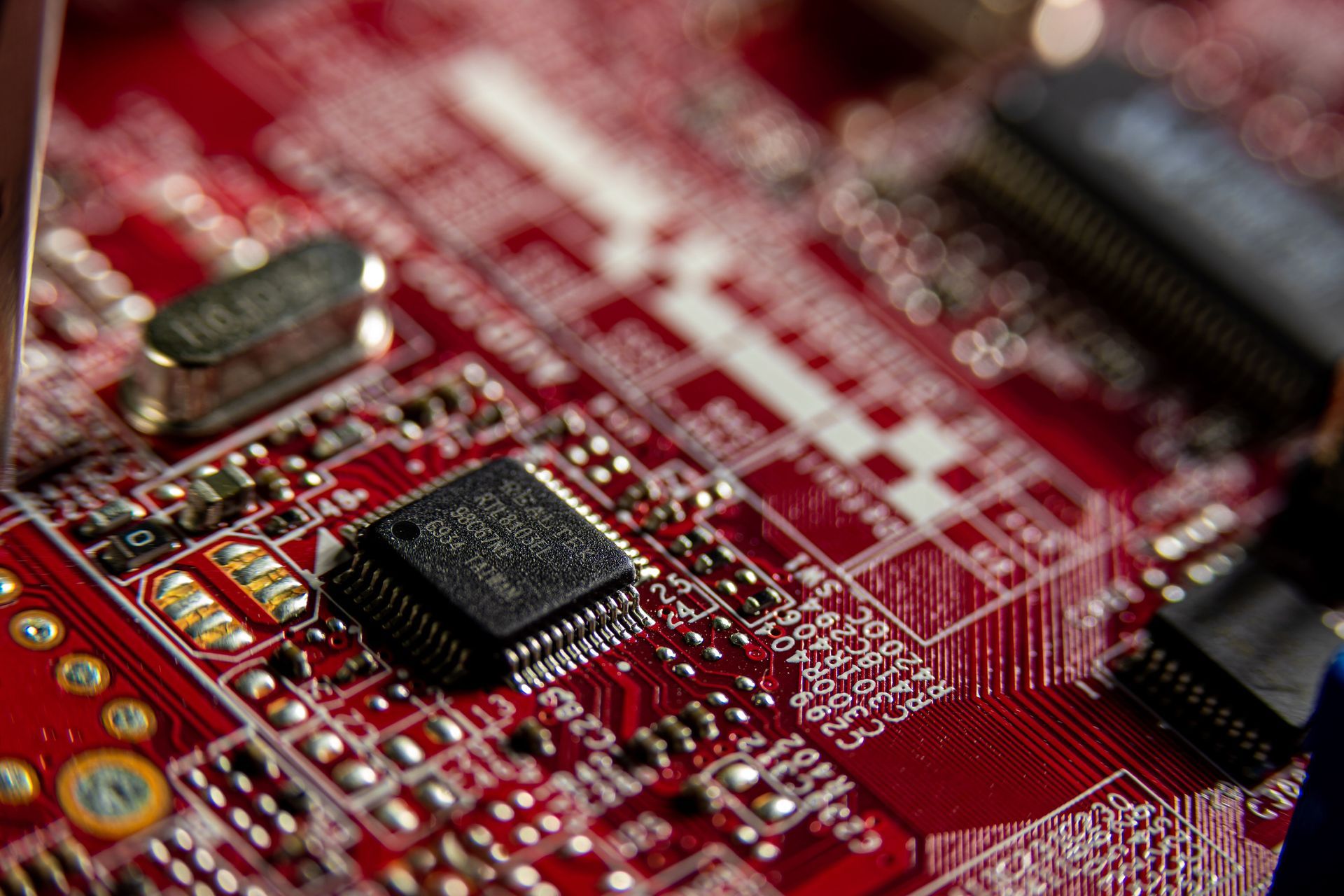
A semiconductor is a material that has electric conductivity between that of a conductor and an insulator, allowing it to control the flow of electrical current. They are the foundation of modern technology. They power smartphones, computers, cars, gaming devices, and servers that support Artificial Intelligence (AI). In the last few years, the price of semiconductors has gone through the roof. The increase in price cannot be attributed to one single cause, but a combination of several factors. One of the major reasons for the price hike is the rapid growth of AI. According to the research firm, Garter, global semiconductor revenue is expected to exceed $1.3 trillion in 2026. This is a 64% increase from 2025. AI-related semiconductors alone are expected to account for roughly 30% of total semiconductor revenue. According to Garter, Dynamic Random Access Memory (DRAM) prices will rise 125% in 2026. Additionally, NAND (Not AND) flash memory is a non-volatile storage technology that retains information without a power source. NAND is commonly found in USB flash drives, memory cards, and SSD cards. These prices are expected to rise 234% in 2026. Both DRAM and NAND prices significantly affect the price of AI semiconductors. The rising costs of raw materials is also a contributing factor to the increasing semiconductor prices. Broad-based increases in the costs of precious metals, packaging materials, energy, and logistics mean most manufacturers report they can no longer absorb these expenses internally. Therefore, manufacturers have chosen to pass the costs onto the purchasers. Finally, the increase in demand for semiconductors is rapidly driving up their costs. There is a booming demand for AI data centers, which require high current and high power products. The increase in demand for chips in electric vehicles is also contributing to the surge in semiconductor prices. Industrial automation in various industries is further driving the need for semiconductor components. How is the increased demand for semiconductors and their rising prices affecting the Nasdaq? The Nasdaq, the traditional index of technological innovation, has evolved into a barometer of AI confidence. In 2025, AI companies captured 80% of all U.S. Stock Market gains. The recent rally reflects a shift in market psychology: initial uncertainty regarding the profitability of AI applications is giving way to the realization that this technology is essential for any business's survival. The market is no longer just investing in the promise of AI, but in the tangible benefits that companies are reaping from automation. On July 1, 2026, semiconductor stocks declined after a first half surge exceeding 80%. The pull back reflected investors quarter -end positioning and profit-taking rather than a change in fundamentals. The retreat concentrated in the t echnology-heavy Nasdaq Composite, which fell 0.66% to 26,040.03. However, on July 6, 2026, the Nasdaq gained 1.12% as semiconductor stocks were bouncing back. This advance indicates that market leadership remains concentrated in AI-linked technologies and semiconductor stocks. In general, the trend illustrates that there is a positive correlation between the price of semiconductors and the Nasdaq. When the price of semiconductors increases, then the Nasdaq tends to remain strong. When the price of semiconductor decreases, then the Nasdaq tends to fall. As the demand for AI increases, the indication is that the Nasdaq should remain strong. Tickers to consider: JTAI, PPCB , FBRX , ATLX , BMNR , AGPU , GLND Sylva Disclaimer: https://www.sylvacap.com/disclaimer

By Ross Silver June 7, 2026
Economic growth, the current labor market and high interest rates significantly impact the stock market by influencing borrowing costs, consumer spending and corporate earnings. To date, the US economy has demonstrated resilience amid moderate growth and inflationary pressures. Due to business investments in areas like artificial intelligence and steady consumer spending, forecasters have projected a 2.0-2.2% growth for 2026. The growth of the US economy typically leads to increased consumer spending and business investment. This can boost corporate earnings and stock prices. Six months into 2026, the labor market remains relatively stable. However, it is showing signs of a gradual decline. In recent months, the unemployment rate has lingered around 4.3-4.5%. Healthcare, construction and certain service areas have seen positive growth. Whereas manufacturing has faced the most challenges. Typically, a robust labor market with low unemployment can increase consumer spending, which positively impacts corporate revenues and stock performance. However, current inflation, driven by energy and service costs, has thrown a wrench into the mix. Core inflation, excluding food and energy, has risen 2.6-2.8%. Elevated energy prices have contributed to this rise, thereby complicating the disinflation process. In May, the U.S. added 172,000 jobs , which is nearly twice what economists were expecting. After stalling out last year , the job market has reaccelerated in 2026 despite the economic obstacles created by the war in Iran and the ongoing blockade of the Strait of Hormuz. According to data released the first week in June, the number of job openings surged to a two-year high in April.  Higher interest rates raise the cost of borrowing for both consumers and businesses. This can constrain capital investments, slow earnings growth, and reduce overall profitability, directly affecting stock prices. Higher interest rates make large purchases such as homes, vehicles and capital equipment more expensive. This lessens demand in interest-sensitive industries such as real estate, and non-essential goods and services. On June 5, 2026, stocks sold off as investors shifted their interest-rate expectations for the remainder of the year. The S&P 500 was down more than 2% in recent trading, weighed down by a roughly 4% decline for tech stocks. It wasn't just the AI rally taking a break. Some two-thirds of the stocks on the New York Stock Exchange were recently in the red. Investors should view interest rates as one factor in the entire market atmosphere. Borrowing costs, consumer spending, bond yields, tax policy, energy prices, and sector fundamentals are all influencing stock prices at the same time. A disciplined investment approach can account for that full picture rather than relying on one piece of the puzzle. Overall, the economy seems to be avoiding the recession zone. Yet persistent higher interest rates are fostering a more selective stock market. Value stocks, (stocks sold below intrinsic value) and companies with a strong balance sheet buying power and tend to fare better despite the higher interest rates. Speculative and highly leveraged companies tend to struggle under these conditions. Investors should navigate the current landscape with careful thought and intention. Tickers to consider: JTAI, PPCB , FBRX , ATLX , BMNR , AGPU , BESS, ACTU , GLND Sylva Disclaimer: https://www.sylvacap.com/disclaimer

By Ross Silver May 15, 2026
On Wednesday, May 13, 2026, The S&P 500 and Nasdaq 100 set new all-time highs supported by strong corporate earnings and AI optimism. These highs occurred despite existing tensions in the Middle East. The markets instead seem to be focusing on the resilient U.S. economic data and corporate performance. The first quarter earnings season has been robust, with 79.6% of S&P 500 companies reporting results beating earnings per share (EPS) estimates and 78% topping revenue forecasts . A look at the top gainers in the S&P 500 Index this year shows that most of them are in the Artificial Intelligence (AI) industry. AI-related sectors, including semiconductors and memory chips, saw outsized gains, with Exchange Traded Funds (ETF) like Invesco QQQ Trust and Roundhill Memory (DRAM) surging last week. Micron reached record highs after a price target upgrade to $740, reflecting bullish views on AI infrastructure demand. AI adoption is contributing to increase company growth and revenue. Companies that integrate AI into their operations often experience enhanced productivity, which leads to higher earnings. Many companies are currently investing in AI infrastructure, which is aimed at long-term value rather than immediate returns. The following are highlights summarizing corporate AI spending: Companies have allocated roughly 1.7% of revenues to AI, doubling the allocation from 2025. 72% of CEO’s are the main decision makers on AI investments. Many firms are prioritizing high impact AI projects over lower value ones. 90% of executives believe that AI will deliver measurable returns by the end of 2026. Investor enthusiasm surrounding artificial intelligence continues to dominate trading activity, particularly within semiconductor stocks tied to the AI infrastructure buildout. Reuters reported that six ( Alphabet [aka Google], Amazon, Apple, Meta Platforms, Microsoft, and Nvidia) out of the "Magnificent Seven” megacap technology stocks reported gains. Tesla is the only company from the Magnificent Seven that did not report gains . AI adoption is driving increased annual revenue and reducing costs for companies, which can significantly enhance corporate earnings. As firms implement AI technologies, they often experience productivity gains that contribute to overall financial growth. The path to realizing these benefits may take time. Typically it takes 2-4 years to see a return on investment, however a small percentage of AI projects see a return within a year. Tickers to consider: JTAI, PPCB , FBRX , ATLX , BMNR , AGPU , BESS, ACTU Sylva Disclaimer: https://www.sylvacap.com/disclaimer

By Ross Silver April 11, 2026
Artificial Intelligence (AI) is the use of computers and machines to mimic the problem-solving and decision making capabilities of the human mind. From autonomous vehicles, humanoid robotic workers, construction and healthcare settings, and the web of interconnected devices that makes up the Internet of Things, AI is very much a part of day to day life. This trend covers the increasing influence of AI on the physical systems and mechanisms that constitute the world around us. It’s sharing our homes, industries and workplaces, becoming a tangible presence in our world and redefining our interactions and relationships with all forms of technology. How are these increasing trends in AI affecting specific markets and industries? Let’s look at some of the pros and cons of the increase of AI in industries that affect our everyday lives. AI in Healthcare: The following benefits promote the use of Artificial Intelligence in healthcare. Faster and more accurate diagnosis : AI-powered imaging helps spot diseases earlier. Personalized treatment plans: Tailors therapy to individual genetics and conditions. Reduced errors in care: AI surgical tools and decision support minimize human error. Expanded access to healthcare: Telemedicine and wearables bring quality care to rural and underserved areas. Improved hospital efficiency: AI scheduling tools cut delays and increase ROI. By managing repetitive tasks, AI allows clinicians to focus on patient care rather than administrative work. Concerns: The number of Americans who want artificial intelligence (AI) involved in their health care is declining. According to a poll commissioned by Ohio State University’s Wexner Medical Center, only 42% are open to AI being used as part of their care, down from 52% in 2024. Additionally, according to the same survey, fewer people believe that AI makes healthcare more efficient. Despite the fact that medical professionals state that AI should NOT be used in making healthcare decisions, 51% of adults reported using AI to make an important decision regarding their healthcare without consulting a physician or healthcare professional. Dr. Ravi Tripathi, Chief Informatics Officer at Ohio State Wexner Medical Center, stated that he would be very concerned about a patient who is following AI. Per Tripathi, “AI is going to be inaccurate or potentially hallucinate about 2% of the time.” The lack of personal interaction between physicians and their patients is concerning. The proposed efficiency of AI will allow doctors to take on more patients during the day, leading to less time spent with each patient. If you are sick, you want the assurance of knowing that your doctor will take as much time with you as possible to alleviate any concerns that you have, no matter how trifling they may seem. Increasing AI in healthcare is primarily about maximizing the financial benefits (seeing more patients) which actually contributes to minimizing time with each patient. AI in Education: Artificial Intelligence (AI) is swiftly changing the educational landscape. Specifically the use of AI brings about the following significant benefits and noteworthy challenges. Benefits: Assistance : Teachers who’ve tried AI have found that it can help make their jobs easier, from coming up with lesson plans to generating student project ideas to creating quizzes. Assistance from AI can allow teachers more time to spend with their students. Speed : AI programs can provide immediate, helpful assistance to a student if a teacher isn’t available. Individualization : AI programs can help individualize learning opportunities for students. These programs can quickly and easily translate materials to another language, making it easier for students who speak another language to understand assignments. Additionally, these programs can revise materials so they are suitable for varying grade levels and tailor projects to suit students’ skills and interests. Personalization : Artificial intelligence can also personalize student learning. By analyzing student performance data, AI-powered tools can determine which students need support to improve their learning experience, and the best ways to help those students. Concerns: Bias: Artificial intelligence is only as knowledgeable as the information it has been trained on. If the AI program is trained on biased information, then when a student asks it a question, they will get a biased response. Errors: In addition to bias, artificial intelligence may generate misinformation. The data that AI draws from may have errors, be outdated, or spread misinformation. Teachers and students should not assume that information provided by AI is accurate. Cheating: Students can use AI programs such as ChatGPT to write entire essays, answer quiz questions, or do their homework. This prevents students from actually developing important cognitive skills such as conducting research, formulating thesis statements, and drawing their own conclusions. Isolation: If students interact with a software program more than with a teacher, they can begin to feel disconnected and isolated. Their motivation and engagement may decrease, which could lead to an increase in dropout rates. Jobs: Artificial intelligence has the potential to be a powerful learning tool. Some teachers worry that AI will replace them. AI in Finances: In the financial sector, AI is widely used to automate trading, manage investments, detect anomalies, and provide customer service. AI algorithms can analyze vast amounts of financial data in record time. This aids in predicting market trends, thereby supporting strategic financial decisions. Some of the advantages of AI in finances include the following: Efficiency: AI can analyze vast datasets much faster than humans, making it ideal for processing complex financial data. Precision: AI algorithms are free of human bias and emotion, which may help make accurate, objective decisions. Automation: Routine and mundane tasks can be automated with AI, freeing financial professionals to focus on more complex work. Risk management: AI can predict market trends and detect anomalies, helping financial firms and their professionals to manage risks effectively. While the benefits of AI in finances can be advantageous; it does not come without its hurdles. The negative side of AI in finances include the following: Job displacement: With the automation of routine tasks, some support staff may lose their jobs. Over-reliance on AI can lead to a lack of critical human involvement in some cases. Security risks: AI systems, like any other technology, are susceptible to hacking and manipulation, leading to significant financial losses. Lack of transparency: AI algorithms are often complex, leading to a lack of understanding of how decisions are made. Bias in algorithms: AI models trained on biased datasets can include algorithmic bias that might produce discriminatory outcomes. Data privacy concerns: Managing sensitive financial data raises questions about security and compliance. Regulatory uncertainty: The absence of standardized global regulations complicates the implementation of AI systems. In general, there are advantages and disadvantages of Artificial Intelligence. AI can save time, catch patterns, and improve decision-making. However, it can also misfire, amplify bias, and create security and trust issues when it is used without checks. The difference is not the tool. The difference is how you deploy it, what you measure, and how much human oversight you keep. Tickers to consider: JTAI, PPCB , FBRX , ATLX , BMNR , AGPU , BESS, ACTU Sylva Disclaimer: https://www.sylvacap.com/disclaimer

By Ross Silver March 11, 2026
On February 28, 2026, United States and Israeli forces began conducting joint strikes on Iran, in what the United States dubbed Operation Epic Fury. This conflict is primarily driven over Iran’s nuclear program and its perceived threats to U.S. allies in the region, particularly Israel and Arab states. Diplomatic efforts to negotiate a nuclear deal have failed, leading to military action. What does this overseas conflict mean for the stock market? Over the weekend, oil prices surged above $100 per barrel as the escalating conflict disrupted production and shipping routes. Raising the fear of the tumultuous energy markets of broader inflation shock. In the United States, retail gasoline prices have risen to their highest level since August 2024. President Trump describes the surge in oil prices as “short term” and a “small price to pay” for destroying Iran’s nuclear threat. President Trump assures that prices will fall rapidly when “the destruction of Iran’s nuclear threat is over.” Case in point, on March 9, 2026, c rude oil prices skyrocketed to $119.50/ barrel. The following day, the same crude oil plummeted to $88.54/ barrel. This significant drop came after President Trump suggested that the conflict would end “very soon.” According to Charles Schwab, there are three potential outcomes for the US-Iran conflict, an upside case, a moderate case and a downcase case. The upside case is defined by a quick end to military operations, with energy production and shipments normalizing and market pricing returning toward pre-conflict levels. In the moderate case, military operations continue for several weeks at reduced intensity before winding down. Oil prices may remain elevated, but there is no major disruption to global supplies. The downside case presents risk to portfolios with a prolonged conflict disrupting global energy supplies and pushing oil prices sharply higher for a sustained period. That would raise recession risk by squeezing household purchasing power and corporate margins while also lifting inflation. Ryan Detrick, chief market strategist at Carson Group states, “Historically, what in the near term seems like a geopolitical crisis tends to be largely resolved from a market perspective over the ensuing six months…near-term volatility and potential weakness is common, but as you go out the returns are more positive.” On March 9, 2026, Wall Street stocks rebounded their way back from a steep selloff to close higher. This rebound came in the eleventh hour as ‌U.S. President Donald Trump suggested that the U.S.-Israeli war on Iran could be close to ending. All three indexes staged a late comeback after President Trump announced that the war was very far ahead of his initial four-to-five week estimated time frame. To be sure, if the Iran conflict goes on for a while, it could hurt global oil flows and therefore affect stocks. According to Stubbs at AlphaCore Wealth Advisory a one month conflict would be manageable. “If there’s going to be a wider conflict and a longer disruption, then eventually parts of the equity market will start to pay attention.” "There is still an awful lot of uncertainty out there regarding ​the duration of the conflict, …" said Sam Stovall, chief investment strategist of ​CFRA Research in New York. "Again today, seeing such a relative reversal in price movements indicates that investors are looking for any opportunity to jump back into the equity markets." Tickers to consider: JTAI, PPCB , FBRX , ATLX, BMNR, AGPU Sylva Disclaimer: https://www.sylvacap.com/disclaimer
By Ross Silver February 12, 2026
Cryptocurrency is a digital currency that operates independently of a central authority, using blockchain technology for secured transactions. Crypto currency has increased in popularity as both a method of payment and a speculative investment. The crypto market has been experiencing a significant downturn. In just 22 days, the crypto market has lost more than $900 billion, showing how fast prices have dropped. Bitcoin seems to be leading the fall of the cryptocurrencies. On January 13, 2026, Bitcoin (BTC-USD) closed at a value of $96,929.33. Today, February 9, 2026, Bitcoin closed at a value of $70, 202,02. This equates to a 27% loss in value. As prices fell quickly, many traders were forced to exit their positions. More than $7 billion worth of trades were closed automatically due to losses. Altcoins, cryptocurrencies other than Bitcoin are also struggling, seeing a sharp decline in value. XRP (XRP-USD) has fallen drastically. On January 12, 2026, XRP closed at a value of $2.16/ share. Today, February 9 2026, XRP closed at a value of $1.44/ share. This equates to a loss of 33% in a month’s time period. Ethereum (ETH-USD), has also taken its bumps. On January 13, 2026, Ethereum closed at $3354.72/ share. Today, February 9, 2026, it closed at $2117.22/ share resulting in almost a 37% loss in value over the past month. Solana (SOL-USD), another altcoin, was valued at $146.75 on January 13, 2026. On Feb. 9, 2026, Solana closed at $87.22, a loss of 40% in value. These sharp price swings have triggered forced selling. Overall, the continued losses in altcoins suggest investors are stepping back from riskier assets rather than buying during the downturn. The following factors are also playing a role in the decline of the crypto market: Investors are putting more money into safer assets such as precious metals in lieu of cryptocurrencies. Hopes for U.S. interest rate cuts have dwindled. Markets now believe that there is only a 10% chance that the Fed will cut rates at the March 18th meeting. The drop in crypto seems to be forcing investors to sell in order to prevent any further losses. However, history indicates that the opposite may be beneficial. Investors who bought practically any Bitcoin dip since 2009 eventually ended up in the green. From that perspective, it might make sense for investors to start building a small position, as long as they are willing to hold the cryptocurrency for several years to maximize their chances of earning a positive return. Tickers to consider: JTAI , PPCB , FBRX Sylva Disclaimer: https://www.sylvacap.com/disclaimer

Show More

Enter your email below to receive free content